Treebeard in a Forest of Options
Benedict, Bombadill, Gandalf, and Beck—
Treebeard “supposes.” His option: “must do.”
Given no choice, with the threat to his neck,
he heralds his plan and follows it through.

Benedict, Bombadill, Gandalf, and Beck—
Treebeard “supposes.” His option: “must do.”
Given no choice, with the threat to his neck,
he heralds his plan and follows it through.
Tim Ferris interviewed Chuck Palahniuk on his podcast recently. Not long into the interview, Palahniuk explains the phenomenon that some readers of his story, “Guts” experience. They pass-out. Maybe that shocking detail made me lean in to hear, what I think to be, a profound summary of what Palahniuk understands his calling to be. He says:
The goal is to make people laugh and then to really break their heart.
This, of course, makes complete sense coming from the man who wrote Fight Club. A movie that holds much of it’s college-aged-viewing charm after first viewing. I think because even after you have been whiplashed by the surprise ending, you ache to see old forms of personhood and institution crumble (while a Pixies song plays) to death.
At the same time, hearing the master of modern-grotesque describe his aim as an author, I was suprised. His words stunned me for their uncanny resemblence to a few lines of rhyme from C.S. Lewis.
Have you not seen that in our days
Of any whose story, song or art
Delights us, our sincerest praise
Means, when all’s said, ‘You break my heart?
“Laughter through tears.”
Writing on the subjects of diversity and inclusion for some new job stuff, I came across this Love-Actually-type video on inclusion. It’s a great artifact of rhetorical mastery: logos and tear-worthy pathos.
An excerpt from George Herbert’s book A Priest to The Temple: Or The Country Parson, His Character, And Rule of Holy Life, included in the chapter titled, “The Authour’s Prayer before Sermon.”
Thou hast exalted thy mercy above all things; and hast made our salvation, not our punishment, thy glory: so that then where sin abounded, not death, but grace superabounded; accordingly, when we had sinned beyond any help in heaven or earth, then thou saidest, Lo, I come! then did the Lord of life, unable of himselfe to die, contrive to do it. He took flesh, he wept, he died; for his enemies he died; even for those that derided him then, and still despise him. Blessed Saviour!
Possible Answers to Prayer
BY SCOTT CAIRNS
Your petitions—though they continue to bear
just the one signature—have been duly recorded.
Your anxieties—despite their constant,
relatively narrow scope and inadvertent
entertainment value—nonetheless serve
to bring your person vividly to mind.
Your repentance—all but obscured beneath
a burgeoning, yellow fog of frankly more
conspicuous resentment—is sufficient.
Your intermittent concern for the sick,
the suffering, the needy poor is sometimes
recognizable to me, if not to them.
Your angers, your zeal, your lipsmackingly
righteous indignation toward the many
whose habits and sympathies offend you—
these must burn away before you’ll apprehend
how near I am, with what fervor I adore
precisely these, the several who rouse your passions.

Thank you, Jenzia Burgos, for the incredible resource of a Black Music History Library. Today, I read Greg Tate’s review of Ashley Kahn’s book A Love Supreme. The article includes this block quote describing how Coltrane’s album begins:
Elvin Jones leans to his left and, striking a Chinese gong, opens the album with an ethereal, exotic splash. “It’s the signal of something different,” remarks [Alice and John Coltrane’s son] Ravi. “You don’t hear that instrument anywhere else on any other John Coltrane recording.” … In one stroke, the hammered metal’s distinctive shimmer clears the air of standard jazz practice… . Coltrane enters with a brief fanfare. Whether blown from minarets or at military barracks, as a call to prayer or to arms, it’s a time-honored device with a timeless function …
Now I’m gonna go listen to “Psalm” and read Coltrane’s liner-notes poem. Salud!
Every US National Park ranked.
I'm headed to the beach this weekend!
Whenever we touch nature we get clean. People who have got dirty through too much civilization take a walk in the woods, or a bath in the sea. Entering the unconscious, entering yourself through dreams, is touching nature from the inside and this is the same thing, things are put right again.
— Carl Jung via: Swissmiss
This Jung quote grabbed my attention for its Emersonian charm and near narration of what I hope this weekend to be. On second reading, I found myself remolding some of the pastoral platitudes. At the risk of over-spiritualizing, here are my thoughts:
When one enters a dream, more than one's self is present. We enter the unconscious in the compony of the invisible. There, not all are benevolent. Yet, when we humble ourself to the good, true, and beautiful one, we bath in the sea, walk in the calming compony of the woods and are consequently washed, calmed, and put right, in the compony of The Man of Sorrows. In him, we get clean. In him, we touch nature from the inside.
Prayer is the portal.
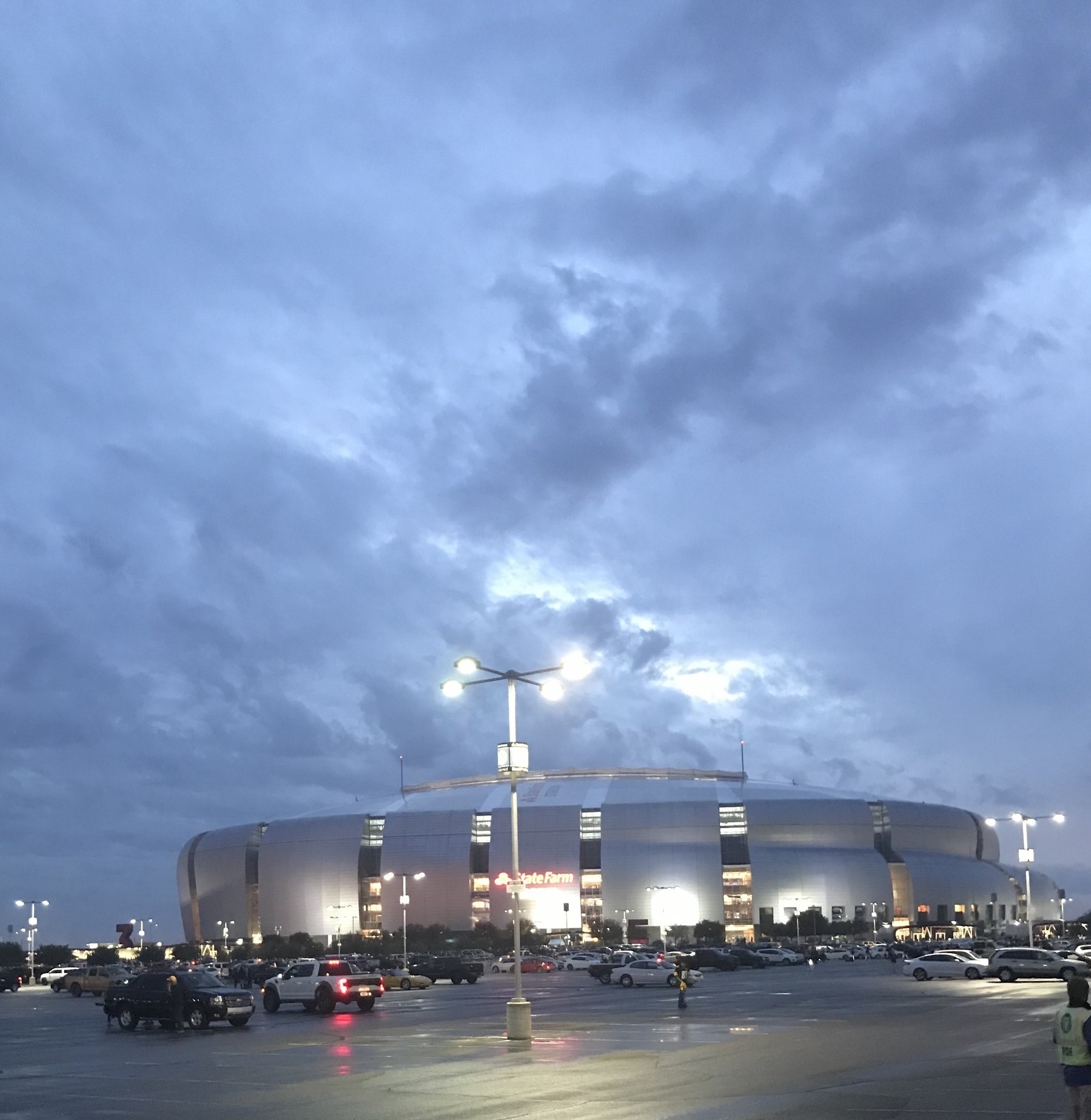
Among. (Day 13 of the Micro.blog August Photoblogging Challenge)
Feliz–belated–Cumple, HUvB!